- Tags:
- Community
Finding Joy in the Little Things: A Conversation with Artist Julia Tooley
The Art of Slowing Down
Life can feel like it's constantly racing ahead. Between endless notifications, packed calendars and scrolling social feeds, it's easy to overlook the small moments that make life sweet.
That's why our Sparking Joy series celebrates the people who remind us to pause, appreciate, and find happiness in everyday moments.
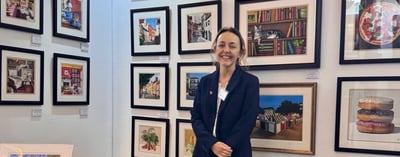
This time, we sat down with artist Julia Tooley, whose beautiful gouache paintings capture everything from flaky croissants and steaming coffee cups to sunlit streets and fresh strawberries. Much like enjoying a slice of sponge cake with a cup of tea, Julia's work encourages us to savour life's simple pleasures.
Over coffee in the stunning surroundings of Norwich Cathedral, Julia shared her creative journey, her love of food-inspired art, and why finding joy in the ordinary is more important than ever.
Why Everyday Moments Matter
Julia's artwork often focuses on familiar objects: books, coffee cups, pastries and peaceful corners of everyday life.
But why? "I think we all need to take a bit more from everyday objects," Julia explains. "We're so used to things being fast, impressive and attention-grabbing that we forget how much beauty there is in the things we see every day." For Julia, inspiration can be found in the first coffee of the morning, the way sunlight catches a spoon, or the quiet moment before the day begins. It's a philosophy we love. After all, whether it's admiring a beautiful painting or sharing a delicious Birthday Cake with loved ones, some of life's greatest joys are often the simplest.
Can Joy Be Quiet?
When people think of joy, they often picture big celebrations, exciting adventures and milestone moments.
But Julia believes joy can be much quieter than that. "There's joy in everyday contentment," she says. "It doesn't always have to be loud."
Her paintings reflect that gentle approach. Rather than demanding attention, they invite viewers to slow down and notice the details.
Many collectors have told Julia that her artwork brings them a small moment of happiness each day. And really, what greater compliment could there be?
Why We're All Obsessed With Croissants
One thing quickly becomes clear when looking through Julia's portfolio: people really love her croissant paintings.
And she's not surprised. "Croissants represent special moments," Julia says. "Sunday mornings, holidays, family time. They're about slowing down and treating yourself."
Sound familiar? Much like gathering around a Victoria Sponge Cake, Chocolate Cake, or Lemon Drizzle Cake with friends and family, food has a remarkable way of connecting us to memories.
It's never just about what's on the plate. It's about who we're sharing it with. And from an artist's perspective, croissants are also incredibly fun to paint. The golden layers, delicate textures and subtle shadows make them a dream subject.
Chasing the Perfect Light
If food is one star of Julia's work, light is undoubtedly the other. "Light is everything," she says. "It's warmth, comfort, stillness and timing." Many of Julia's paintings begin with photographs she takes herself, capturing fleeting moments when familiar places suddenly look extraordinary. A city street at sunset. Morning light through a café window. Reflections dancing across a coffee cup. It's these moments that transform the ordinary into something magical. Just as a beautifully decorated Birthday Cake Sponge Cake can become the centrepiece of a celebration, light has a way of turning everyday scenes into something memorable.
From Business Meetings to Paint Brushes
Julia's path into art wasn't conventional. As a self-taught artist, she built her creative career from the ground up after working in the corporate world. Looking back, the greatest joy has come from seeing people connect with her work. "Seeing someone stop and really look at a painting is incredible," she says. Art fairs have become particularly meaningful, giving her the opportunity to meet collectors face-to-face and hear the stories behind why a piece resonates with them. For Julia, those personal connections are every bit as important as the artwork itself.
Every Artist Has a "Bin Stage"
One of the most relatable moments from our conversation came when Julia described what she calls the "bin stage."
It's that point during a painting when everything looks wrong. The colours feel flat. The details aren't working. Self-doubt creeps in. Every creative person knows the feeling. Her solution? Music. "If I sing along to something familiar, it helps me stop overthinking." And eventually, those final highlights and finishing touches arrive, transforming the painting into something special. A reminder that the messy middle is often part of the process.
Where Else Does Julia Find Joy?
When she's not painting, Julia finds happiness in music, cooking, family life and long walks with her golden retriever, Monty. She particularly loves observing the changing seasons. Walking the same route week after week allows her to notice tiny changes that others might miss: fresh spring buds, golden autumn leaves, or winter sunlight stretching across the landscape. That sense of curiosity and appreciation flows directly into her artwork.
Why Art Still Matters
In a world increasingly dominated by technology, Julia believes art remains important because it reminds us of our humanity. Every painting contains hours of dedication, patience and care. When someone brings a piece of art into their home, they're also bringing home part of the artist's story. It's a connection that can't be replicated and perhaps that's why art continues to resonate so deeply. It encourages us to slow down. To notice. To appreciate. To find joy in what's already around us.
A Little Reminder to Celebrate the Everyday
Julia's work beautifully demonstrates that happiness isn't always found in grand gestures or once-in-a-lifetime experiences. Sometimes it's found in a warm coffee. A flaky pastry. A sunlit street. Or a slice of Birthday Cake shared with someone you love.
Whether you're celebrating a special occasion with a Red Velvet Cake, marking a milestone with a Gluten Free Birthday Cake, or simply sending a thoughtful Cake Card to brighten someone's day, it's often the smallest moments that leave the biggest impression. And that's something worth celebrating.