- Tags:
- Cake
Cake Style Guide: Drip vs Naked vs Fondant vs Tiered Cakes
Drip, naked, fondant and tiered cakes can all create a strong centrepiece, but they behave differently.
Four cake styles with different strengths
Drip, naked, fondant and tiered cakes can all create a strong centrepiece, but they behave differently. The right style depends on how the cake should taste, where it will be displayed, how far it must travel and who will assemble it. Appearance is only one part of the decision.
What is a drip cake
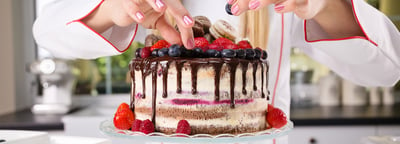
A drip cake is coated with buttercream or icing and finished with a contrasting chocolate, caramel or coloured glaze that runs down the sides. It feels playful and generous, and can be adapted for birthdays, children's parties and modern weddings.
The drip needs the right consistency and temperature. Heat can soften it, while transport can mark protruding decorations. Choose a travel-tested version if the cake will be delivered.
What is a naked cake
A naked cake has little or no outer coating, leaving the sponge layers and filling visible. A semi-naked cake uses a thin scrape of buttercream around the outside. Both suit relaxed weddings, garden parties and celebrations with natural styling.
With less coating, the sponge has less protection from air. Keep it covered for as long as possible and avoid leaving it on display all day. Fresh fruit and flowers should be added safely and close to serving time.
What is a fondant cake
Fondant is a smooth, rollable icing placed over a cake to create a clean surface. It supports detailed decoration, sharp colours, models and formal finishes. It is useful when the visual theme is the main priority.
Fondant adds sweetness and some guests prefer the taste of buttercream. Detailed shapes can also be vulnerable in transit. Ask how the decoration affects storage, cutting and delivery.
What is a tiered cake
A tiered cake stacks two or more cakes using boards and internal supports. It creates height and can provide several flavours. Tiered cakes suit weddings and large milestones, but require accurate serving calculations and careful assembly.
Confirm whether the cake arrives assembled, who supplies the stand and who is responsible once it reaches the venue. Height creates impact and additional logistics.
Which style travels best
Low, stable sponge cakes with buttercream and flat toppers are generally simpler to deliver than tall tiers or delicate decorations. Fondant offers some surface protection but models can break. Naked cakes can dry if exposed, and drips may soften in heat.
For nationwide delivery, choose a product designed around packaging and courier movement. Do not judge travel readiness from appearance alone.
Compare flavour and serving
Naked and drip cakes often put sponge and buttercream at the centre of the eating experience. Fondant cakes prioritise a smooth decorative surface. Tiered cakes can offer multiple flavours and feed larger groups, but they need a cutting plan.
Most Sponge whole cakes come in medium sizes serving 10-12 and large sizes serving 18-20. Multiple whole cakes or Baby Sponges can create abundance without requiring a formal tiered structure.
Choose for the occasion
Use a drip cake for colour and playfulness, a naked cake for relaxed natural styling, fondant for precise decorative detail and tiers for height and scale. Then test that choice against transport, venue temperature, guest numbers and the birthday person's actual flavour preference.
Questions to ask a baker or venue
Ask what the cake contains, how many portions it provides and how it should be stored. For drip and naked cakes, ask how long they can remain on display. For fondant, confirm what sits beneath the icing. For tiers, establish transport, assembly and internal supports.
Ask the venue where the cake table will stand and whether the room becomes warm. Direct sunlight, radiators and dance-floor traffic create problems for every style. Confirm who will cut the cake and whether staff need a serving diagram.
If the answer to a practical question changes the design, change the design. Guests remember a cake that tasted good and arrived safely for longer than they remember a technically perfect edge.
Budget and value
Complexity affects price as well as appearance. Hand-modelled fondant work and assembled tiers usually involve more labour and equipment than a simple sponge or edible topper. Decide which element guests will value: height, detailed decoration, several flavours or generous portions. Spending on all four may not improve the experience. Several well-presented whole cakes can create an abundant table for less than a bespoke tiered centrepiece, while individual cakes can reduce cutting and service work. Compare the whole plan, including stands, delivery and venue charges, rather than the cake price alone.
Style should help the celebration
A cake succeeds when it arrives safely, feeds the room and tastes good. Choose the visual style only after those practical questions have clear answers.