What’s the Difference Between Flours for Baking?
Confused about which flour to use in baking? Discover the difference between cake, self-raising, and plain flour — plus tips for the perfect sponge.
*Updated July 2025 to include new FAQs, clearer flour comparisons, and baking substitution tips.*
Flour is one of the most essential ingredients in baking – but knowing which flour to use for cakes can make or break your bake. Should you reach for plain flour or self-raising? And what even is cake flour?
Here’s a quick, helpful guide to the different types of flour used in cake baking – including tips on when to use each one, how to swap flours in recipes, and the difference between corn flour and cornstarch.
Plain Flour vs Self-Raising Flour
Plain flour (also known as all-purpose flour) is milled from wheat grain and typically has the bran and wheat germ removed, resulting in a smooth, versatile flour. It's often used for:
Cakes
Pastries
Biscuits
Sauces
However, plain flour doesn’t contain any raising agents, so it needs to be combined with baking powder or bicarbonate of soda when used in cakes.
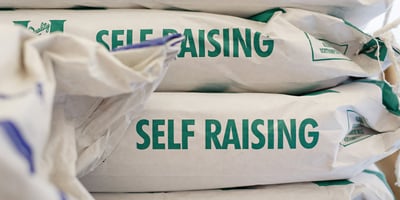
In contrast, self-raising flour includes a raising agent already mixed in – typically baking powder – and sometimes a touch of salt. This helps cakes rise consistently without needing to measure out extras.
At Sponge, we use high-quality self-raising flour in all our cakes to ensure a perfect rise and texture in every sponge.
Can You Substitute Plain Flour for Self-Raising Flour?
It’s best not to switch between plain and self-raising flour unless you know how to adjust the recipe. Why?
Because the ratio of raising agent matters – and self-raising flour has a precise amount blended in:
Roughly ½ tsp of baking powder per 100g of plain flour.
Swapping one for the other without adjusting the rest of the recipe could result in a cake that’s flat, dense, or overly risen.
Why We Use Self-Raising Flour in Sponge Cakes
Consistency is key when baking in batches. We rely on self-raising flour with added sodium bicarbonate to make sure every cake bakes with the same rise and texture.
It’s part of our commitment to:
Perfectly risen cakes every time
Reliable recipes that work for every occasion
Using British ingredients and supporting British producers
What About Gluten-Free Flour?
To bake our delicious gluten-free sponge cakes, we use a specially blended gluten-free self-raising flour made from:
Rice
Potato
Tapioca
Maize
Buckwheat
This mix gives the same beautiful rise and texture as our regular sponges – just without the gluten.
Our vegan cakes use the same self-raising flour too – but with soya milk and other plant-based swaps.
Corn Flour vs All-Purpose Flour – What’s the Difference?
Though both can be used in baking, they behave very differently.
Feature | Plain Flour (All-Purpose) | Corn Flour |
|---|---|---|
Texture | Soft, fine | Slightly gritty or smooth |
Gluten | Contains gluten | Naturally gluten-free |
Absorbency | Moderate | Highly absorbent |
Common Use | Cakes, pastries, sauces | Thickening, GF baking |
Flavour | Neutral | Slightly sweet, lighter taste |
Cornstarch vs Corn Flour
These two sound similar but serve different purposes:
Cornstarch: a white, chalky starch extracted from corn endosperm. Used to thicken sauces, custards, and gravies.
Corn flour: milled from the whole corn kernel. Slightly yellow, it contains fibre, protein, and starch, making it suitable for gluten-free bakes.
If you’re using corn flour in cake baking instead of an all-purpose flour, you may need to add extra liquid (like milk or water) to prevent a dry sponge.
Flour Shelf Life: Why It Matters
Self-raising flour contains raising agents that lose potency over time. So, it’s important to:
Check expiry dates before baking
Avoid using old self-raising flour in cakes, as your sponge may not rise properly
Plain flour typically has a longer shelf life because it doesn’t contain rising agents.
At Sponge, we go through self-raising flour so quickly that freshness is never an issue – every batch bakes to our high standards.
FAQs: Choosing the Right Flour for Baking
What’s the best flour for sponge cake?
Self-raising flour is ideal for a light, airy sponge with consistent rise – that’s why we use it in all our cakes.
Can I make cake flour at home?
Yes – blend plain flour with a bit of cornflour to lower the protein content. (Roughly 1 tbsp cornflour per 100g flour.)
Is corn flour gluten-free?
Yes – but it behaves differently in baking. Be sure to test and tweak recipes if using it as a substitute.
Is it safe to use out-of-date flour?
It’s best not to. Especially with self-raising flour, expired raising agents can mean your cake won’t rise properly.
Final Crumb of Advice
The best flour for cake baking depends on what you’re making – but if you’re after consistency, lightness, and a perfect rise every time, self-raising flour is our go-to.
Ready to taste the difference? Order one of our sponge cakes made with love (and the perfect flour), send a cake card to someone you love, or jazz up your picnic or beach day with our new, limited edition beach hut baby sponges.